 Preview
 Send
Send Share
Share
 Details

 Download
 Similars
 X-Ray
X-Ray Diaporama
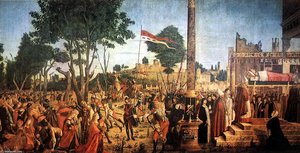
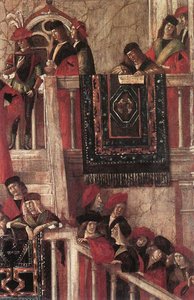
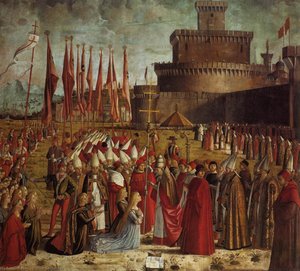
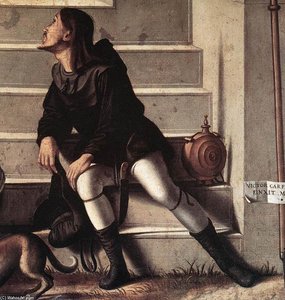
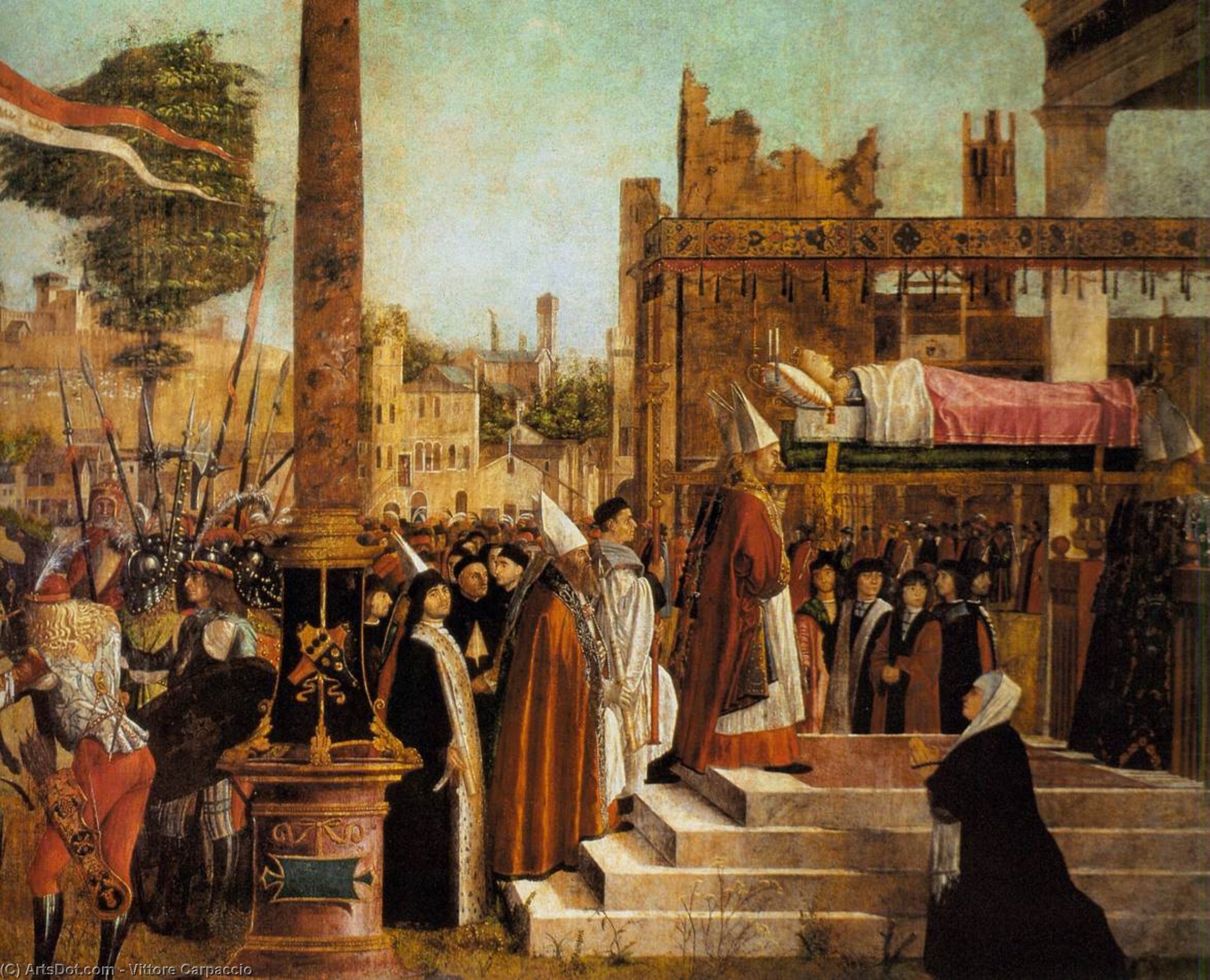
Martyrdom of the Pilgrims and the Funeral of St Ursula (detail)


 Read More
Hand Made Oil Reproduction
Hand-painted oil on canvas in your size and frame, made to order by our artists. ( Buy Print Buy Image)




P118B $10

P118H $10

P118W $10

P438Z $10

P508JH $12

P508YH $12

P805H $10

P805Z $10

P919BZ $10

P919G $10

P919XJ $10

P959ZH $10

P968JZ $12

W106C $8

W218G $10

W218JH $8

W218Y $10

W307PJ $10

W316G $10

W316PJ $8

W316Y $10

W398PJ $8

W4111J $10

W500HY $15

W500JH $15

W692G $12

W849H $8

W940BG $15

W953PJ $8




Pick from our preset sizes that match the artwork's original proportions.

You may enter your own dimensions to fit a specific frame or space. If your selected size does not match the original image's proportions, we will either crop the artwork or extend the painting with additional hand-painted elements. A digital mockup will be sent for your approval before production begins.
Please note that the on-screen preview does not reflect the actual cropping or extension. Only the mockup will accurately show the final composition.
While custom sizes are available, we recommend selecting a dimension from the predefined list to preserve the original proportions.
After order, ArtsDot.com team will email client for instructions and provide a mockup preview
Worldwide Delivery () in 3/4 weeks instead of standard 5 weeks. (6 September). No compromise on quality.

Free Worldwide Express Shipping

High-Quality Linen Canvas

Full Shipping Insurance

Customs Tax Refund Guarantee

True Color Matching Guarantee

100-Day Return Policy (Defects Only)

100% Money-Back Guarantee

Bulk Discount Offer
 Glass option is only available in size under 110 CM

Martyrdom of the Pilgrims and the Funeral of St Ursula (detail)
Reproduction Medium
Reproduction Size
-


Total Price
$ 263
A Window into Venetian Life and Faith: Vittore Carpaccio’s Dramatic Narrative
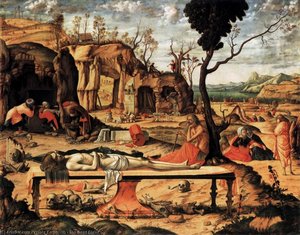
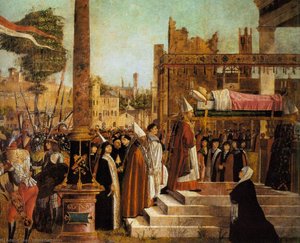
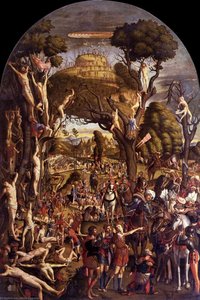
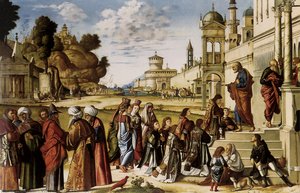
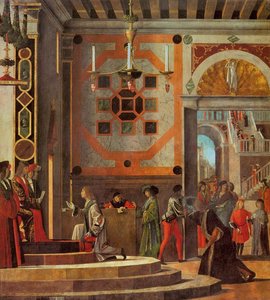
Vittore Carpaccio's "Martyrdom of the Pilgrims and the Funeral of St. Ursula" isn’t merely a painting; it’s a meticulously crafted tableau vivant, a vibrant snapshot of 15th-century Venice steeped in religious fervor and civic pride. Completed between 1493 and 1498 for the Loredan family, patrons of the prestigious Scuola di Sant'Orsola, this monumental cycle transports us to a world where legend intertwined seamlessly with daily life. The sheer scale of the work – nine large-scale panels depicting a complex narrative drawn from Jacobus de Voragine’s *Golden Legend* – immediately commands attention, inviting prolonged contemplation and revealing layers of detail that reward repeated viewing.
Carpaccio's genius lies not in idealized beauty or revolutionary innovation, but in his masterful ability to synthesize diverse artistic influences. He draws heavily from Early Netherlandish painting, particularly the meticulous realism and dramatic lighting championed by artists like Antonello da Messina, while simultaneously embracing the narrative conventions of Italian Renaissance theatre. This fusion results in a style that is both strikingly detailed and emotionally resonant, capturing the essence of human drama with remarkable precision.
The Story Unfolds: A Pilgrimage of Faith and Tragedy
At its core, the cycle recounts the tragic tale of Saint Ursula, daughter of a Christian king, who was betrothed to a pagan prince in exchange for his conversion. Refusing to succumb to forced marriage, she embarked on a pilgrimage with her eleven thousand virgin companions to Rome, where they were ultimately martyred by Attila the Hun. Carpaccio doesn’t shy away from the gruesome details of the event; instead, he presents it as a poignant meditation on faith, duty, and sacrifice. The panels depict key moments in this journey: the initial meeting between the king and the ambassadors, Ursula's departure with her companions, their encounter with the Pope, and finally, her dream foretelling her impending martyrdom.
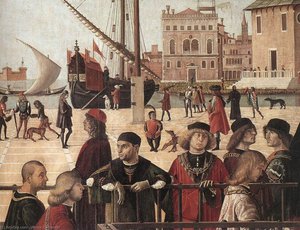
The narrative is interwoven with elements of Venetian civic life. The inclusion of figures dressed as members of the Compagnia della Calza – a prominent Venetian carnival society known for its elaborate spectacles – subtly connects the religious drama to the city’s vibrant cultural scene. The architectural settings, meticulously rendered in a style that echoes both Venice and Renaissance Italy, further ground the story within its historical context.
Symbolism and Technique: A Symphony of Color and Detail
Carpaccio's technique is characterized by an astonishing level of detail – from the intricate folds of clothing to the subtle expressions on the faces of his figures. He employs a rich, earthy palette dominated by reds, browns, and golds, creating a sense of warmth and drama. The use of *chiaroscuro*—the dramatic interplay of light and shadow—is particularly effective in highlighting key moments and drawing the viewer’s eye to important details. Notice, for example, how the light illuminates Ursula's face during her dream, emphasizing her vulnerability and impending fate.
The composition of each panel is carefully orchestrated, with figures arranged within complex architectural settings that create a sense of depth and perspective. Carpaccio’s mastery of spatial relationships—a hallmark of Early Netherlandish painting—is evident in the way he uses linear perspective to draw the viewer into the scene. The inclusion of *didaskalos* – a narrator figure often depicted as an angel – further enhances the theatrical quality of the work, guiding the viewer through the story’s unfolding narrative.
A Legacy of Narrative Power: Reproductions and Beyond
“Martyrdom of the Pilgrims and the Funeral of St. Ursula” remains one of Carpaccio's most celebrated achievements, a testament to his artistic skill and storytelling prowess. Today, reproductions offer an accessible way to experience this remarkable masterpiece, bringing its dramatic narrative and evocative atmosphere into homes and galleries worldwide. When selecting a reproduction, consider the quality of the print and the attention to detail—a faithful rendition should capture the essence of Carpaccio’s original vision, allowing you to lose yourself in the rich tapestry of Venetian life and faith.
Related Artworks
Artist Biography
early life and training
vittore carpaccio, a prominent italian painter, was born in venice around 1465. he studied under the tutelage of gentile bellini, a renowned artist of the venetian school. this apprenticeship laid the foundation for carpaccio's future success.artistic style and influences
carpaccio's style was characterized by its conservative nature, showing minimal influence from the humanist trends that transformed italian renaissance painting during his lifetime. his work was influenced by antonello da messina's style and early netherlandish art. this unique blend of styles resulted in a distinctive approach to venetian painting.notable works
- the legend of saint ursula, a cycle of nine paintings, is carpaccio's most famous work. this series, now housed in the gallerie dell'accademia, showcases his mastery of narrative painting.
- glory of st. ursula altarpiece (1491) demonstrates carpaccio's skill in capturing light and color, reminiscent of giovanni bellini's style.
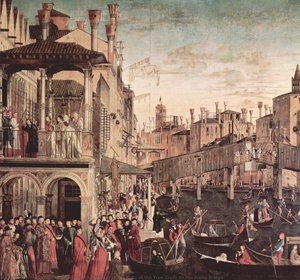
- miracle of the relic of the cross at the ponte di rialto (1494) highlights carpaccio's ability to balance composition and narrative.
career highlights and legacy
- carpaccio's principal works were executed between 1490 and 1519, ranking him among the early masters of the venetian renaissance.
- his orientalist style, as seen in st. george baptizing the selenites, reflects a new fascination with the levant.
- carpaccio's work has been somewhat overlooked in comparison to his contemporaries, such as giovanni bellini or giorgione.
references and further reading
discover more about vittore carpaccio and the venetian school on ArtsDot.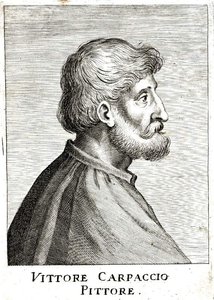
Vittore Carpaccio
1465 - 1526 , Italy
Quick Facts
- Artistic Movement Or Style: Early Venetian Renaissance
- Artists Or Movements Influenced By This Artist: ['Early Netherlandish Painting']
- Artists Who Influenced This Artist:
- Antonello da Messina
- Gentile Bellini
- Date Of Birth: Venice, Italy (c. 1465)
- Date Of Death: 1526
- Full Name: Vittore Carpaccio
- Nationality: Italian
- Notable Artworks:
- The Legend of Saint Ursula
- Glory of St. Ursula Altarpiece
- Miracle of the Relic of the Cross at the Ponte di Rialto
- Place Of Birth: Venice
Related Articles
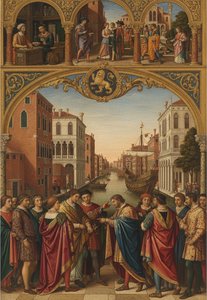
Vittore Carpaccio: Venetian Renaissance Narrative & the Poetics of Detail
Explore the captivating world of Vittore Carpaccio, a master storyteller of the Venetian Renaissance. Discover his intricate details, narrative cycles like 'The Legend of St. Ursula,' and unique artistic style.
Jacopo Tintoretto's Masterpieces: 25 Paintings That Define Venetian Drama | ArtsDot
Explore 25 breathtaking masterpieces by Jacopo Tintoretto, the Venetian master of drama and light. Discover the stories behind iconic Renaissance paintings & find museum-quality art reproductions to elevate your home decor on ArtsDot.com.
The Golden Light of Innovation: Exploring the Venetian Renaissance Art Movement (1430–1580)
Explore the Golden Age of Venetian art (1430–1580). Discover Giorgione, Titian & Tintoretto's techniques, the 'colorito' revolution, and lasting influence. Expert insights for collectors & enthusiasts.
Pietro Longhi's Venetian Scenes: A Study of Rococo Society & Domestic Life
Explore the captivating world of Pietro Longhi's Venetian scenes! Discover insightful analysis of his Rococo masterpieces & social commentary on 18th-century life. Learn about this 'Venetian Hogarth' and his lasting artistic legacy.
Jacopo Palma il Giovane: A Venetian Master's Poetic Evolution
Explore the captivating world of Jacopo Palma il Giovane, a pivotal Venetian Renaissance master. Discover his unique style, influenced by Titian & Tintoretto, and learn about key works perfect for discerning collectors.