 Preview
 Send
Send Share
Share
 Details

 Download
 Similars
 X-Ray
X-Ray Diaporama
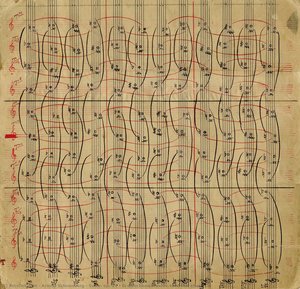
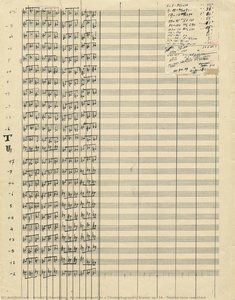
Moses and Aron
 Acrylic On Canvas
- WallArt
- Expressionist Modernism
 1930
1930- 19th Century
 27.0 x 35.0 cm
 Arnold Schönberg Center
 Read More
Hand Made Oil Reproduction
Hand-painted oil on canvas in your size and frame, made to order by our artists. ( Buy Print Buy Image)




P118B $10

P118H $10

P118W $10

P438Z $10

P508JH $12

P508YH $12

P805H $10

P805Z $10

P919BZ $10

P919G $10

P919XJ $10

P959ZH $10

P968JZ $12

W106C $8

W218G $10

W218JH $8

W218Y $10

W307PJ $10

W316G $10

W316PJ $8

W316Y $10

W398PJ $8

W4111J $10

W500HY $15

W500JH $15

W692G $12

W849H $8

W940BG $15

W953PJ $8




Pick from our preset sizes that match the artwork's original proportions.

You may enter your own dimensions to fit a specific frame or space. If your selected size does not match the original image's proportions, we will either crop the artwork or extend the painting with additional hand-painted elements. A digital mockup will be sent for your approval before production begins.
Please note that the on-screen preview does not reflect the actual cropping or extension. Only the mockup will accurately show the final composition.
While custom sizes are available, we recommend selecting a dimension from the predefined list to preserve the original proportions.
After order, ArtsDot.com team will email client for instructions and provide a mockup preview
Worldwide Delivery () in 3/4 weeks instead of standard 5 weeks. (17 August). No compromise on quality.

Free Worldwide Express Shipping

High-Quality Linen Canvas

Full Shipping Insurance

Customs Tax Refund Guarantee

True Color Matching Guarantee

60-Day Return Policy (Defects Only)

100% Money-Back Guarantee

Bulk Discount Offer
 Glass option is only available in size under 110 CM

Moses and Aron
Reproduction Medium
Reproduction Size
-


Total Price
$ 263
Artwork Description
A Fragment of Divine Discord: Schönberg’s “Moses und Aron”
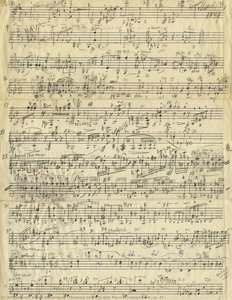
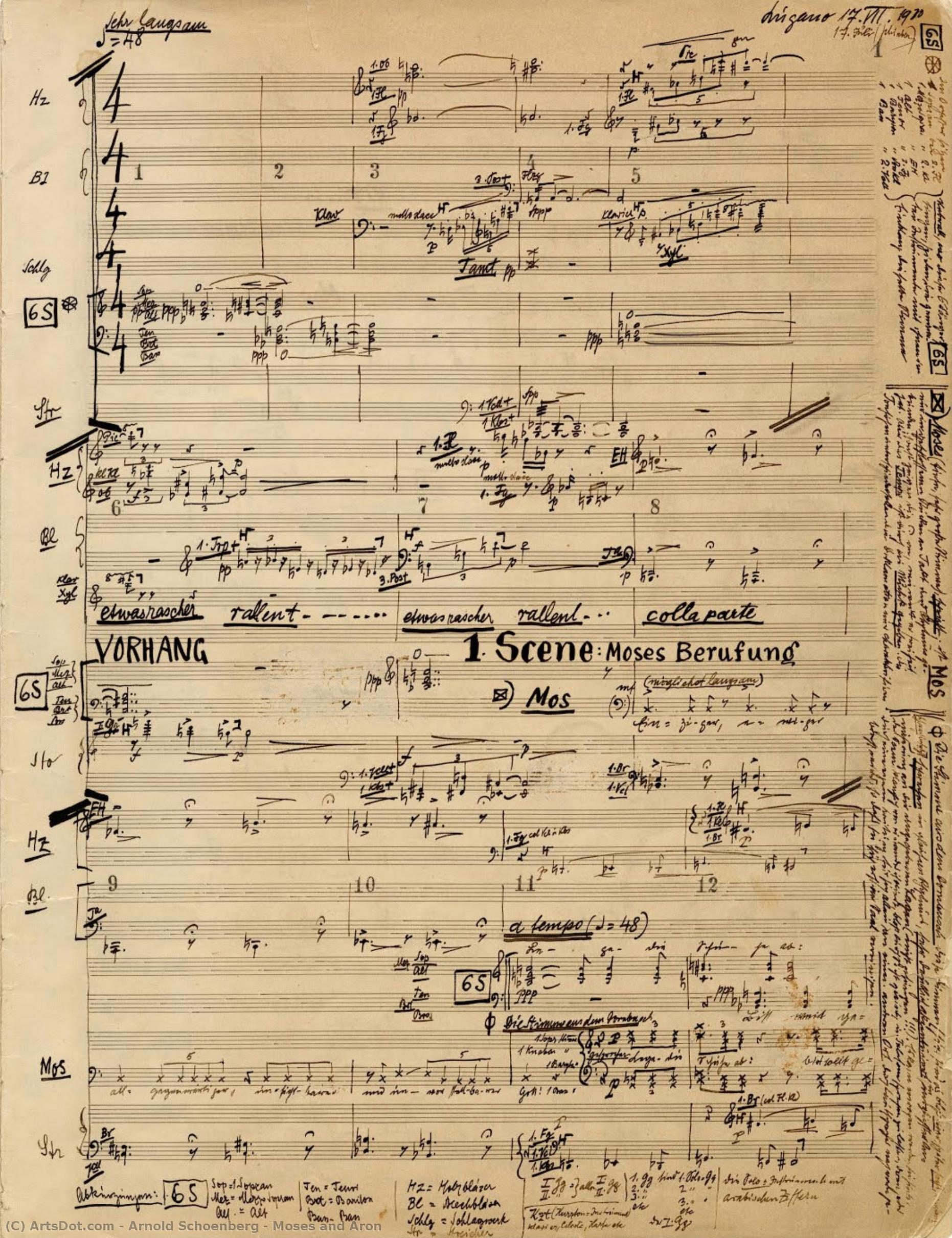
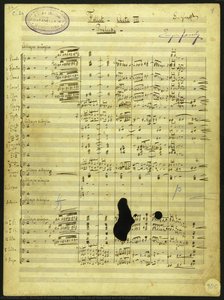
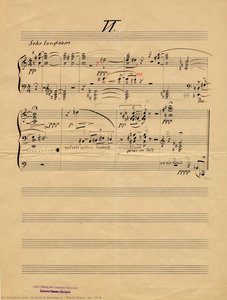
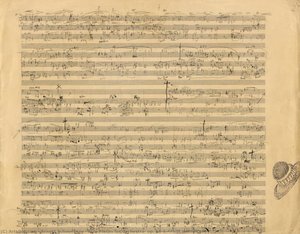
This meticulously rendered hand-painted reproduction captures a poignant fragment – a music sheet – from Arnold Schoenberg's ambitious opera, "Moses und Aron," completed in 1930. More than just musical notation, this document embodies the very heart of Schoenberg’s revolutionary exploration of faith, doubt, and the struggle between abstract thought and earthly desire. The image itself is deceptively simple: a close-up view of handwritten German music, scattered with notes and annotations, yet it speaks volumes about a composer wrestling with profound philosophical and religious questions. The sheet's aged appearance – dating back to 1930 – immediately grounds the artwork in its historical context, hinting at the intense creative process that birthed one of the most significant works in modern music.
A Symphony of Contradiction
Schoenberg conceived “Moses und Aron” as a dramatic exploration of the biblical story of the giving of the Ten Commandments. However, he wasn’t simply transcribing a religious text; he was dissecting it, analyzing its inherent contradictions. The opera juxtaposes the austere pronouncements of Moses – representing pure, unwavering thought and divine revelation – with the more pragmatic, almost materialistic concerns of Aron, his brother. This dynamic is powerfully visualized in the music sheet itself: the dense, complex notation reflecting Moses’ intellectual rigor while the scattered markings suggest Aron's preoccupation with earthly details. The unusual instrumentation—an enlarged orchestra combined with instruments like the harp, celesta, and mandolines – further underscores this deliberate contrast, creating a sonic landscape that mirrors the operatic drama.
Technique and Detail: A Window into Schoenberg’s Process
- Handwritten Notation: The reproduction faithfully captures the character of Schoenberg's original handwritten score. The varying penmanship, annotations, and markings reflect his iterative process of composition and refinement.
- Material Texture: Subtle textures have been meticulously rendered to simulate the feel of aged paper and ink, adding a layer of realism and historical authenticity to the artwork.
- Color Palette: A muted palette of browns, creams, and grays evokes the atmosphere of a composer’s study, emphasizing the intellectual and contemplative nature of the work.
Symbolism and Emotional Resonance
Beyond its technical aspects, this reproduction offers a powerful symbolic representation of artistic struggle. The fragmented sheet suggests the incomplete nature of human understanding, mirroring Schoenberg’s own grappling with complex theological and philosophical ideas. The act of studying the music evokes a sense of intimacy and invites the viewer to contemplate the profound questions at the heart of the opera: Can reason alone comprehend the divine? What is the relationship between faith and doubt? The image resonates with an emotional intensity, capturing the tension between aspiration and limitation, idealism and pragmatism – qualities that define both Schoenberg’s genius and the enduring power of “Moses und Aron.”
Related Artworks


Artist Biography
early life and musical beginnings
arnold schoenberg, an austrian-american composer, was born on september 13, 1874, in vienna, austria. his early life was marked by a humble beginning, with his father being a shoe-shopkeeper. despite this, schoenberg's innate passion for music led him to largely self-educate himself in the field.- schoenberg explored film music and wrote more tonal music, completing his chamber symphony no. 2 in 1939.
- he satirized fascist tyrants in ode to napoleon (1942), after byron.
- post-war vienna offered him honorary citizenship, but he was ill, as depicted in his string trio (1946).
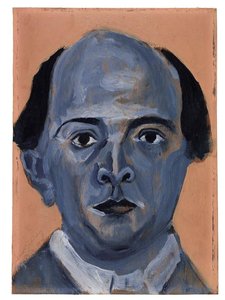
arnold schoenberg
1874 - 1951 , Austria
Quick Facts
- Artistic Movement Or Style: Twelve-tone technique; Expressionism
- Artists Or Movements Influenced By This Artist:
- Anton Webern
- Alban Berg
- Artists Who Influenced This Artist:
- Johannes Brahms
- Richard Wagner
- Date Of Birth: September 13, 1874
- Date Of Death: 1951
- Full Name: Arnold Schoenberg
- Nationality: Austrian-American
- Notable Artworks:
- Suite, op. 29
- Music Typewriter
- Staffliner
- Place Of Birth: Vienna, Austria
Related Articles
Harmonies on Canvas: Exploring the Visual Representation of Music in Art History
Explore the fascinating history of music's visual representation in art! From ancient symbolism to modern abstraction, discover how artists have captured sound and emotion on canvas. Expert insights & stunning examples.

La Biennale's Masterpieces: 25 Artworks to Inspire Your Home | ArtsDot
Explore 25 iconic artworks from La Biennale di Venezia! Discover the stories behind masterpieces of Italian art, modernism & Renaissance paintings. Find museum-quality reproductions and elevate your home decor with ArtsDot.com. Explore the full collection online.

Beyond Symbolism: Exploring the Spiritual Landscapes of Mikalojus Konstantinas Čiurlionis's Art
Explore the captivating world of Mikalojus Konstantinas Čiurlionis, a pioneer of abstract art. Discover his unique blend of music and painting, spiritual themes, and lasting influence on Lithuanian culture. Learn more at ArtsDot.