 Preview
 Send
Send Share
Share
 Details

 Download
 Similars
 X-Ray
X-Ray Diaporama
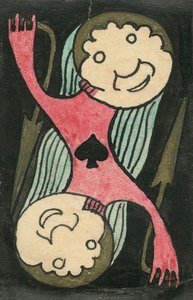
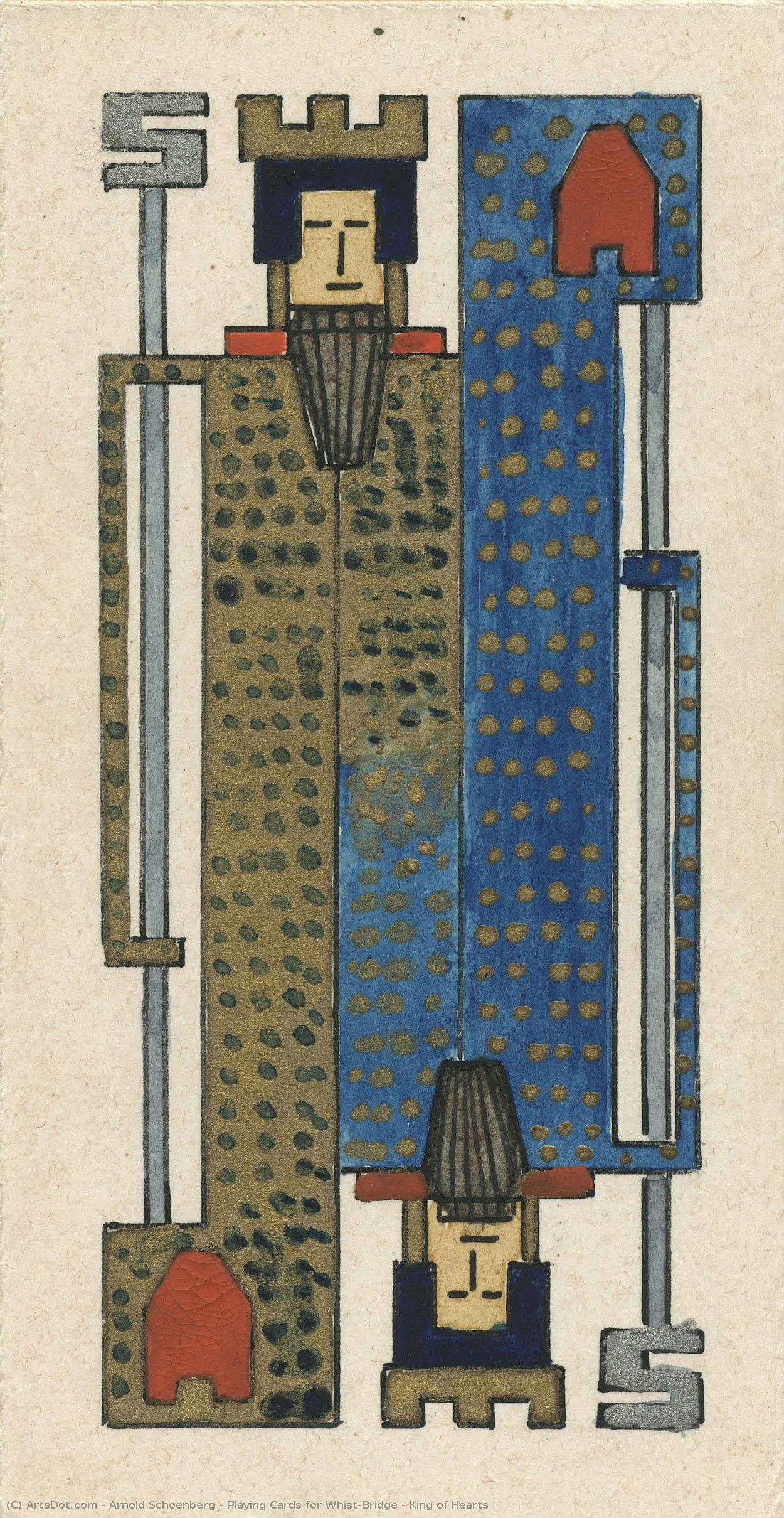
Playing Cards for Whist/Bridge - King of Hearts
 Acrylic On Canvas
- WallArt
- Early Modernism
 1910
1910 5.0 x 10.0 cm
 Arnold Schönberg Center
 Read More
Hand Made Oil Reproduction
Hand-painted oil on canvas in your size and frame, made to order by our artists. ( Buy Print Buy Image)




P118B $10

P118H $10

P118W $10

P438Z $10

P508JH $12

P508YH $12

P805H $10

P805Z $10

P919BZ $10

P919G $10

P919XJ $10

P959ZH $10

P968JZ $12

W106C $8

W218G $10

W218JH $8

W218Y $10

W307PJ $10

W316G $10

W316PJ $8

W316Y $10

W398PJ $8

W4111J $10

W500HY $15

W500JH $15

W692G $12

W849H $8

W940BG $15

W953PJ $8




Pick from our preset sizes that match the artwork's original proportions.

You may enter your own dimensions to fit a specific frame or space. If your selected size does not match the original image's proportions, we will either crop the artwork or extend the painting with additional hand-painted elements. A digital mockup will be sent for your approval before production begins.
Please note that the on-screen preview does not reflect the actual cropping or extension. Only the mockup will accurately show the final composition.
While custom sizes are available, we recommend selecting a dimension from the predefined list to preserve the original proportions.
After order, ArtsDot.com team will email client for instructions and provide a mockup preview
Worldwide Delivery () in 3/4 weeks instead of standard 5 weeks. (1 September). No compromise on quality.

Free Worldwide Express Shipping

High-Quality Linen Canvas

Full Shipping Insurance

Customs Tax Refund Guarantee

True Color Matching Guarantee

60-Day Return Policy (Defects Only)

100% Money-Back Guarantee

Bulk Discount Offer
 Glass option is only available in size under 110 CM

Playing Cards for Whist/Bridge - King of Hearts
Reproduction Medium
Reproduction Size
-


Total Price
$ 263
A Glimpse into Schönberg’s Card Game: The King of Hearts
This meticulously crafted hand-painted reproduction captures Arnold Schönberg's intriguing 1910 card game for Whist/Bridge, a remarkable artifact born from the heart of Vienna’s artistic ferment. More than just a deck of playing cards, this work represents a bold experiment in visual language and a subtle rebellion against established conventions. Measuring a compact 5 x 10 cm, it invites contemplation on the intersection of music, art, and the burgeoning avant-garde movement that defined early 20th-century Europe.
- The Artist’s Vision: Schönberg, a towering figure in musical history known for his pioneering work in atonality and serialism, applied his rigorous intellectual approach to visual design. This card game wasn't simply decorative; it was a conceptual exercise, exploring the possibilities of symbolic representation through a layered system of imagery.
- Breaking with Tradition: Unlike Ditha Moser’s celebrated “Wiener Werkstätte” cards from 1906 – characterized by their strict mirror symmetry and meticulous detail – Schönberg deliberately fractured this aesthetic. He sought to convey meaning not just through direct representation, but through a complex interplay of reflection, color, and form.
Decoding the Symbolism
The image itself depicts a regal figure—the King of Hearts—a central element within Schönberg’s system. The crowned male figures, distinguished by their dots rather than colored areas (reserved for the female Queens), embody a deliberate departure from traditional iconography. This subtle distinction reflects Schönberg's broader artistic concerns: a move away from literal representation towards a more abstract and emotionally charged approach.
- Double Pictures & Reflection: Schönberg’s ingenious technique involved “double pictures,” where images were deliberately crossed over, utilizing the horizontal and diagonal axes for reflection. This created a sense of depth and complexity, inviting multiple interpretations and challenging the viewer to actively engage with the artwork.
- Color as Symbol: While the male figures utilize dots, the Queens employ colored areas, suggesting an association with emotion and subjective experience – a key element in Schönberg’s musical philosophy. The strategic use of color adds another layer of symbolic meaning, reinforcing the work's intellectual depth.
Historical Context & Craftsmanship
Created around 1910, this card game emerged during a period of intense artistic and intellectual innovation in Vienna. Schönberg’s experimentation reflects the broader shift towards abstraction and non-representational art that was taking place across Europe. The meticulous hand-painting technique employed to create this reproduction ensures an unparalleled level of detail and fidelity to the original design. Each brushstroke captures the essence of Schönberg's vision, resulting in a piece that is both historically significant and aesthetically captivating.
- Materials & Technique: This reproduction utilizes archival-quality materials and skilled hand-painting techniques, guaranteeing its longevity and preserving the nuances of the original design. The attention to detail reflects the commitment to producing exceptional art reproductions.
- A Collector’s Piece: More than just a decorative item, this card game is a unique artifact that offers a fascinating glimpse into the mind of one of music's most influential composers. It represents an investment in both artistic history and exquisite craftsmanship.
Related Artworks
Artist Biography
early life and musical beginnings
arnold schoenberg, an austrian-american composer, was born on september 13, 1874, in vienna, austria. his early life was marked by a humble beginning, with his father being a shoe-shopkeeper. despite this, schoenberg's innate passion for music led him to largely self-educate himself in the field.- schoenberg explored film music and wrote more tonal music, completing his chamber symphony no. 2 in 1939.
- he satirized fascist tyrants in ode to napoleon (1942), after byron.
- post-war vienna offered him honorary citizenship, but he was ill, as depicted in his string trio (1946).
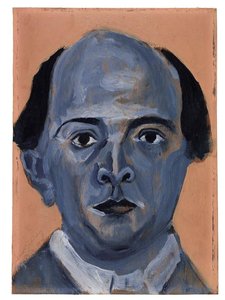
arnold schoenberg
1874 - 1951 , Austria
Quick Facts
- Artistic Movement Or Style: Twelve-tone technique; Expressionism
- Artists Or Movements Influenced By This Artist:
- Anton Webern
- Alban Berg
- Artists Who Influenced This Artist:
- Johannes Brahms
- Richard Wagner
- Date Of Birth: September 13, 1874
- Date Of Death: 1951
- Full Name: Arnold Schoenberg
- Nationality: Austrian-American
- Notable Artworks:
- Suite, op. 29
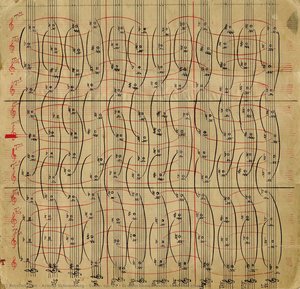
- Music Typewriter
- Staffliner
- Place Of Birth: Vienna, Austria
Related Articles

Playful Masterpieces: Top 10 Artworks for a Joyful Home | ArtsDot
Find joy & inspiration! Explore 10 playful masterpieces by Monet, Matisse & more. Discover art history, vibrant colors & uplifting stories behind these iconic paintings. Museum-quality reproductions at ArtsDot.com – explore the full collection online!
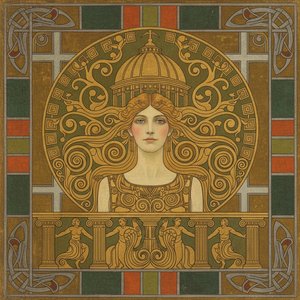
The Vienna Secession: A Rebellion of Form & Spirit in Fin-de-Siècle Art
Discover the revolutionary Vienna Secession art movement! Explore Klimt, Olbrich & more. Learn about its history, characteristics & lasting influence on modern art. High-quality reproductions available.

Cézanne's Masterpieces: 25 Iconic Artworks to Transform Your Space
Journey through 25 iconic artworks by Paul Cézanne – a master of Impressionism and Post-Impressionism. Explore his landscapes, still lifes, and the stories behind these timeless masterpieces. Discover museum-quality reproductions & curated decor at ArtsDot.com.
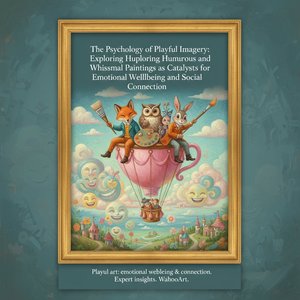
The Psychology of Playful Imagery: Exploring Humorous and Whimsical Paintings as Catalysts for Emotional Wellbeing and Social Connection
Explore the psychology of playful art! Discover how humorous & whimsical paintings foster emotional wellbeing & connection. Expert insights for collectors & luxury home decor. ArtsDot.
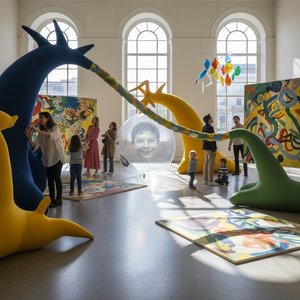
The Allure of Playfulness in Art: Exploring Emotional Resonance & Aesthetic Impact
Explore the captivating world of playful art & its emotional impact! Discover Impressionism, Abstract Expressionism & more with ArtsDot.com – museum-quality reproductions & expert guidance for building a collection you'll love.