 Send
Send Share
Share
 Details

 Download
 Similars
 Diaporama
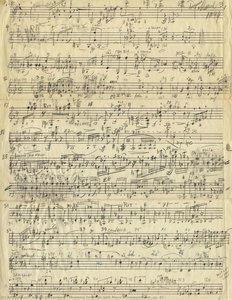
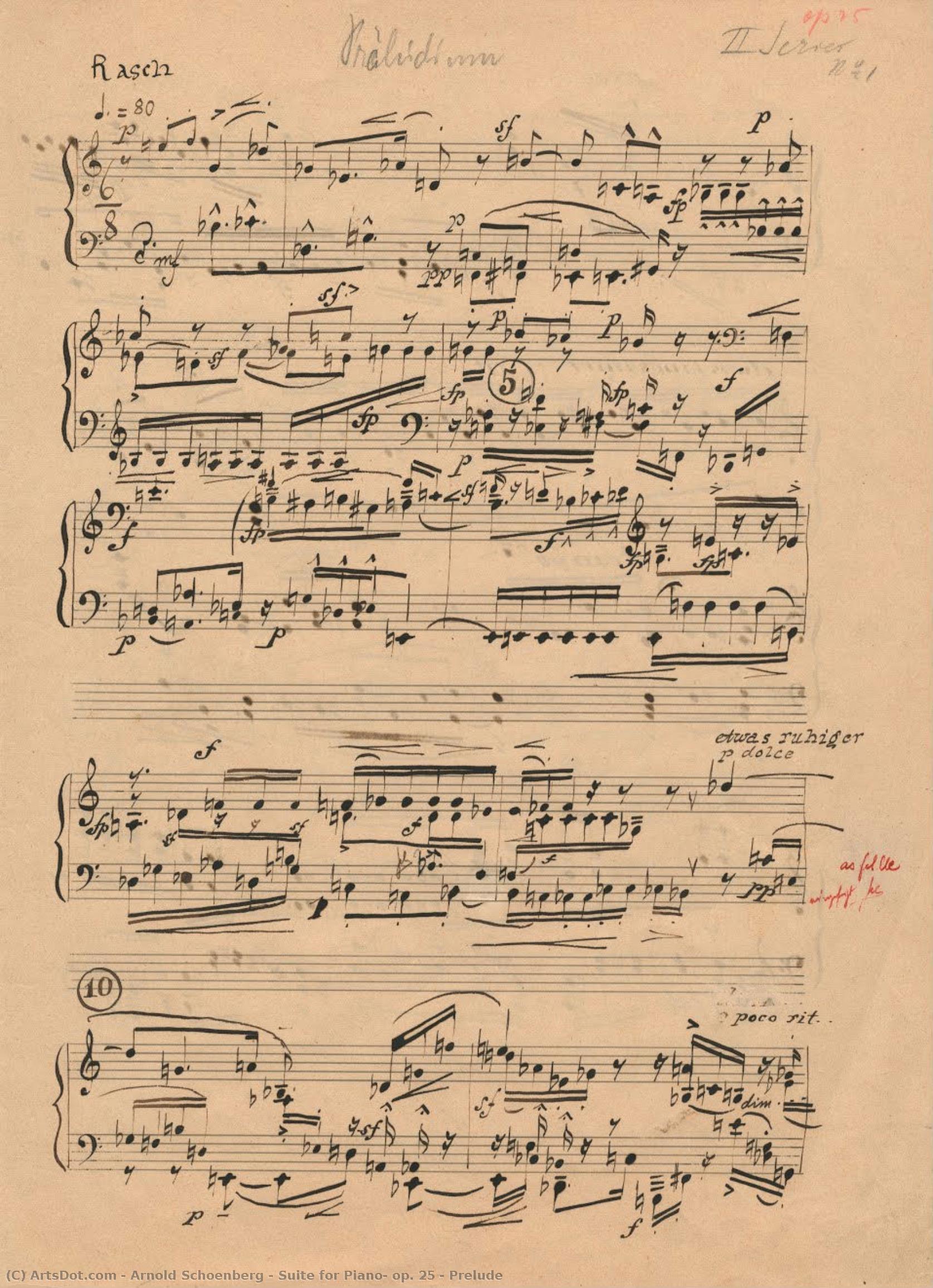
Suite for Piano, op. 25 - Prelude
 Giclée Print
- Digital
- Modernism
 1921
1921 24.0 x 33.0 cm
 Arnold Schönberg Center
 Read More
Hand Made Oil Reproduction
Hand-painted oil on canvas in your size and frame, made to order by our artists. ( Buy Print Buy Image)




































Pick from our preset sizes that match the artwork's original proportions.

You may enter your own dimensions to fit a specific frame or space. If your selected size does not match the original image's proportions, we will either crop the artwork or extend the painting with additional hand-painted elements. A digital mockup will be sent for your approval before production begins.
Please note that the on-screen preview does not reflect the actual cropping or extension. Only the mockup will accurately show the final composition.
While custom sizes are available, we recommend selecting a dimension from the predefined list to preserve the original proportions.
After order, ArtsDot.com team will email client for instructions and provide a mockup preview
Worldwide Delivery () in 3/4 weeks instead of standard 5 weeks. (22 August). No compromise on quality.

Free Worldwide Express Shipping

High-Quality Linen Canvas

Full Shipping Insurance

Customs Tax Refund Guarantee

True Color Matching Guarantee

60-Day Return Policy (Defects Only)

100% Money-Back Guarantee

Bulk Discount Offer
 Glass option is only available in size under 110 CM

Suite for Piano, op. 25 - Prelude
Reproduction Medium
Reproduction Size
-


Total Price
$ 263
Artwork Description
A Frozen Moment of Innovation: Schoenberg's "Prelude" – A Window into Serialism
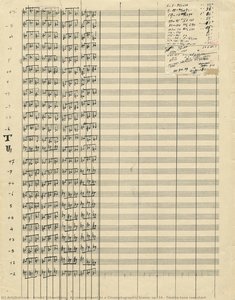
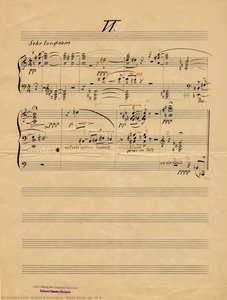
This meticulously reproduced page from Arnold Schoenberg’s “Suite for Piano, op. 25 – Prelude” (1921) offers more than just a musical score; it presents a tangible link to one of the most revolutionary periods in Western music history. The image captures a moment of intense creative deliberation, a snapshot of Schoenberg wrestling with the nascent principles of twelve-tone composition – a method that irrevocably altered the course of 20th-century music and continues to resonate today.
- The Architectonics of Atonality: The dense, almost claustrophobic arrangement of notes immediately draws the eye. Each line represents meticulously calculated relationships within Schoenberg’s revolutionary system. The retrograde – a backward transposition of the musical row – is prominently displayed, demonstrating his deliberate manipulation of the established harmonic language.
- A Dialogue with the Masters: Despite its radical departure from traditional tonality, the “Prelude” reveals a deep respect for musical heritage. The notation’s style echoes that of Johann Sebastian Bach and Mozart, suggesting Schoenberg's intention to build upon existing forms while simultaneously dismantling them. The inclusion of familiar elements like the opening theme, deliberately repeated, highlights this interplay between tradition and innovation.
- The Hand of the Composer: The aged paper, subtly textured and bearing handwritten annotations in red ink, adds a layer of intimacy and authenticity. These editorial notes – likely Schoenberg’s own markings – reveal his exacting standards and the painstaking process of refining his composition.
Technical Mastery & Historical Context
The reproduction faithfully captures the technical precision demanded by Schoenberg's method. The restricted use of only eight out of forty-eight possible permutations within the twelve-tone row underscores the composer’s deliberate control and strategic application of this complex system. This wasn’t simply about generating random notes; it was a highly structured process designed to eliminate tonal centers and create a new musical language.
Created in 1921, during a period of immense artistic upheaval following World War I, the “Suite” reflects the anxieties and aspirations of the time. Schoenberg’s exploration of atonality mirrored broader cultural shifts, challenging established norms and paving the way for modernist movements across various art forms. The piece's forward drive, propelled by repeated pitches, suggests a striving towards clarity and order amidst chaos.
Symbolism & Emotional Resonance
Beyond its technical complexity, the image evokes a powerful sense of intellectual engagement. The density of the notation speaks to the immense concentration required to navigate Schoenberg’s intricate system. The subtle shadows cast by the lines create a feeling of depth and urgency, mirroring the composer's focused pursuit of musical innovation.
The inclusion of the “B-A-C-H” motif – a deliberate nod to Bach – is particularly significant. This iconic sequence, employed in only eight out of forty-eight permutations, represents a conscious return to tradition while simultaneously subverting it. It’s a visual representation of Schoenberg's ambition: to create a new musical language rooted in the past, yet utterly unique and forward-looking.
Dimensions & Acquisition
This reproduction is presented in a generous 24 x 33 cm format, ideal for display in a variety of settings – from private study to corporate gallery. The monochromatic color palette, reminiscent of early manuscript scores, adds to the piece’s timeless appeal. A perfect addition to any collection celebrating musical history or modern art.
Related Artworks
Artist Biography
early life and musical beginnings
arnold schoenberg, an austrian-american composer, was born on september 13, 1874, in vienna, austria. his early life was marked by a humble beginning, with his father being a shoe-shopkeeper. despite this, schoenberg's innate passion for music led him to largely self-educate himself in the field.- schoenberg explored film music and wrote more tonal music, completing his chamber symphony no. 2 in 1939.
- he satirized fascist tyrants in ode to napoleon (1942), after byron.
- post-war vienna offered him honorary citizenship, but he was ill, as depicted in his string trio (1946).
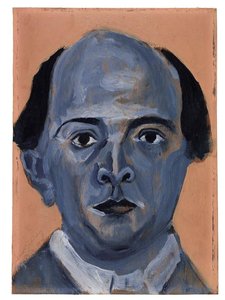
arnold schoenberg
1874 - 1951 , Austria
Quick Facts
- Artistic Movement Or Style: Twelve-tone technique; Expressionism
- Artists Or Movements Influenced By This Artist:
- Anton Webern
- Alban Berg
- Artists Who Influenced This Artist:
- Johannes Brahms
- Richard Wagner
- Date Of Birth: September 13, 1874
- Date Of Death: 1951
- Full Name: Arnold Schoenberg
- Nationality: Austrian-American
- Notable Artworks:
- Suite, op. 29
- Music Typewriter
- Staffliner
- Place Of Birth: Vienna, Austria
Related Articles
Earthy Hues & Masterpieces: Top 10 Paintings with 'Mushroom' Tones |
Explore 10 iconic paintings with captivating 'mushroom' tones! Discover Van Gogh, Monet & Rembrandt’s masterpieces—earthy palettes, rich history & artistic techniques. Find museum-quality art reproductions and curated decor ideas at
Harmonies on Canvas: Exploring the Visual Representation of Music in Art History
Explore the fascinating history of music's visual representation in art! From ancient symbolism to modern abstraction, discover how artists have captured sound and emotion on canvas. Expert insights & stunning examples.
Sandstone & Sunlight: 10 Masterpieces of Earth-Toned Art |
Journey through 10 iconic paintings bathed in 'sand' tones – from Van Gogh to Monet. Explore the stories, techniques & warm palettes of these timeless masterpieces. Find museum-quality art reproductions at and bring classic beauty home.
Earthy Hues & Masterpieces: Top 10 Paintings Dominated by Clay Tones |
Explore 10 iconic paintings dominated by rich clay tones – from Rembrandt's warmth to Van Gogh’s earthy landscapes. Discover art history, techniques & find museum-quality reproductions at . Explore the full collection online!

The Resonance of Earthly Tones: Exploring Nuance, History & Emotional Impact in Art
Explore the captivating world of earth tones in art! Discover historical context, emotional resonance & artistic techniques behind these timeless colors. Find inspiration for your home decor and museum-quality reproductions.