 Preview
 Send
Send Share
Share
 Details

 Download
 Similars
 X-Ray
X-Ray Diaporama
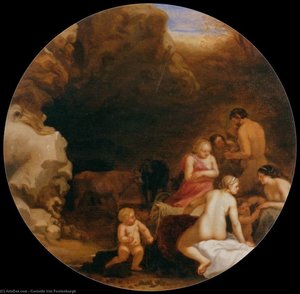
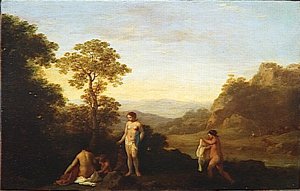
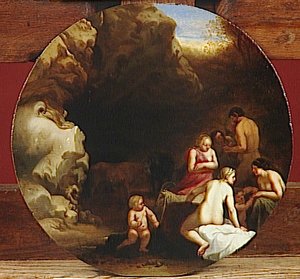
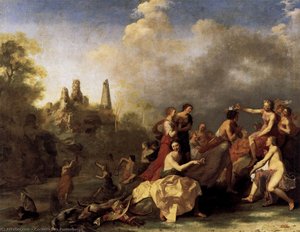
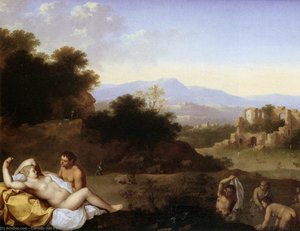
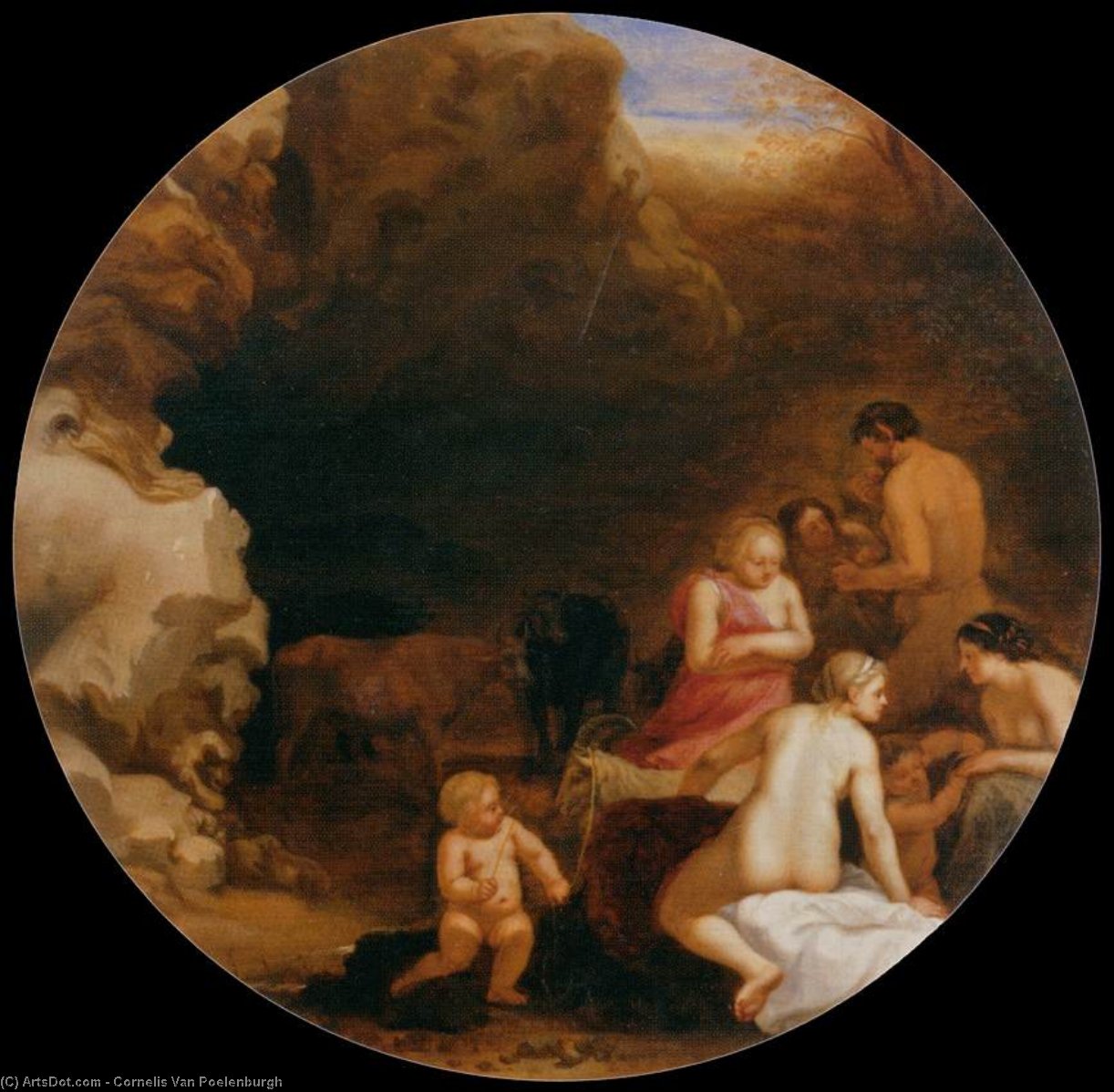
Nymphs and Satyrs at the Entrance of a Grotto
 Acrylic
- WallArt
- Dutch Baroque
 1624
1624 27.0 x 27.0 cm
 The Louvre
 Read More
Hand Made Oil Reproduction
Hand-painted oil on canvas in your size and frame, made to order by our artists. ( Buy Print Buy Image)




P118B $10

P118H $10

P118W $10

P438Z $10

P508JH $12

P508YH $12

P805H $10

P805Z $10

P919BZ $10

P919G $10

P919XJ $10

P959ZH $10

P968JZ $12

W106C $8

W218G $10

W218JH $8

W218Y $10

W307PJ $10

W316G $10

W316PJ $8

W316Y $10

W398PJ $8

W4111J $10

W500HY $15

W500JH $15

W692G $12

W849H $8

W940BG $15

W953PJ $8




Pick from our preset sizes that match the artwork's original proportions.

You may enter your own dimensions to fit a specific frame or space. If your selected size does not match the original image's proportions, we will either crop the artwork or extend the painting with additional hand-painted elements. A digital mockup will be sent for your approval before production begins.
Please note that the on-screen preview does not reflect the actual cropping or extension. Only the mockup will accurately show the final composition.
While custom sizes are available, we recommend selecting a dimension from the predefined list to preserve the original proportions.
After order, ArtsDot.com team will email client for instructions and provide a mockup preview
Worldwide Delivery () in 3/4 weeks instead of standard 5 weeks. (31 August). No compromise on quality.

Free Worldwide Express Shipping

High-Quality Linen Canvas

Full Shipping Insurance

Customs Tax Refund Guarantee

True Color Matching Guarantee

60-Day Return Policy (Defects Only)

100% Money-Back Guarantee

Bulk Discount Offer
 Glass option is only available in size under 110 CM

Nymphs and Satyrs at the Entrance of a Grotto
Reproduction Medium
Reproduction Size
-


Total Price
$ 263
Cornelis van Poelenburgh’s Enchanting Vision of Myth and Landscape
Cornelis van Poelenburgh (1594 – 1667), a Dutch landscape painter hailing from Utrecht, stands as a cornerstone figure in the burgeoning Baroque movement within the Netherlands. His artistic journey began under the tutelage of Abraham Bloemaert, establishing him firmly within the influential artistic circles of his time and equipping him with foundational skills that would propel him to international acclaim.
- Early Training & Influences: Bloemaert’s guidance instilled in van Poelenburgh a meticulous approach to observation and representation—a characteristic that would permeate his entire oeuvre. Crucially, his formative years coincided with an unprecedented influx of Italian artists and ideas into Amsterdam, fostering a dialogue between Mannerist traditions and the burgeoning Baroque aesthetic.
- Roman Engagement & Style: Van Poelenburch’s pilgrimage to Rome in 1627 proved transformative, immersing him in the vibrant artistic milieu of the papal court. This experience cemented his stylistic allegiance to Italianate landscapes—characterized by hazy atmospheric perspective and idealized compositions—infused with subtle biblical or mythological narratives.
Notable Masterpieces: Capturing Mythological Grace
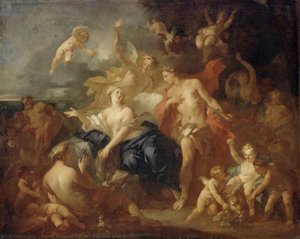
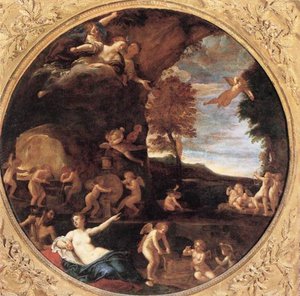
Among van Poelenburgh’s most celebrated works is “Satyrs spying on nymphs,” completed around 1627. This painting exemplifies his signature style, presenting a serene hillside vista populated by figures engaged in contemplative bathing—a motif directly borrowed from classical mythology and reflecting the humanist ideals prevalent during the period.
- Composition & Technique: The artist skillfully employs atmospheric perspective to convey depth and luminosity, creating an illusion of distance that enhances the scene’s tranquility. Delicate brushstrokes contribute to a velvety surface texture, capturing the subtle nuances of light and shadow with remarkable precision.
- Symbolism & Narrative: The depiction of nymphs and satyrs—symbols of fertility and sensual pleasure—underscores the Renaissance fascination with classical mythology as a vehicle for exploring themes of beauty, virtue, and human experience.
A Legacy Enduring Through Reproduction
“Council of the Gods,” painted circa 1630, further showcases van Poelenburgh’s masterful command of landscape painting and his embrace of Roman artistic conventions. The canvas depicts a panoramic hilltop scene dominated by goddesses—a testament to the artist's ability to synthesize disparate influences into a cohesive visual statement.
- Historical Context: Produced during the height of Dutch Golden Age, “Council of the Gods” reflects the intellectual fervor and artistic ambition of its era. It embodies the humanist spirit championed by thinkers like Erasmus and Descartes, emphasizing reason and observation alongside aesthetic contemplation.
- Emotional Impact: The painting’s grandeur and serenity evoke a profound sense of awe—inspiring viewers to contemplate the sublime beauty of nature and the enduring power of mythic narratives.
A ArtsDot reproduction offers an unparalleled opportunity to experience the captivating artistry of Cornelis van Poelenburgh firsthand. Bringing this iconic landscape masterpiece into your home elevates interior design while celebrating a pivotal moment in European art history.
Related Artworks

Artist Biography
early life and training
cornelis van poelenburgh, a prominent dutch landscape painter, was born in utrecht, netherlands in 1594. he initially trained with abraham bloemaert, a renowned artist of the time. this foundational training laid the groundwork for van poelenburch's future success.artistic career and influences
van poelenburch's travels to rome in the early 17th century significantly influenced his work, making him a leading representative of the first generation of dutch landscape painters active in italy. his small-scale paintings, often featuring italianate landscapes with small figures enacting biblical or mythological scenes, showcased his unique style. notable works:- satyrs spying on nymphs (after 1627), a characteristic example of van poelenburch's work, featuring archaic landscapes with figures bathing. (view on ArtsDot)
- council of the gods (c. 1630), a painting showcasing van poelenburch's idealized hilly landscape and roman-inspired goddesses, now housed in the mauritshuis (the hague, netherlands). (view on ArtsDot)
legacy and later life
van poelenburch's work was highly regarded by his contemporaries, including the grand duke of tuscany and the dutch stadholder. he later returned to utrecht, where he passed away in 1667, just a few years after his old teacher abraham bloemaert. key points:- born in utrecht, netherlands in 1594
- trained with abraham bloemaert
- influenced by his time in rome
- known for small-scale italianate landscapes with figures
- died in utrecht in 1667 view cornelis van poelenburch's artworks on ArtsDot learn more about cornelis van poelenburgh on wikipedia
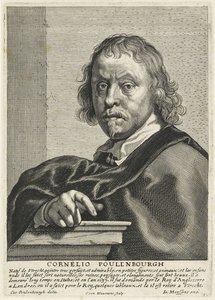
cornelis van poelenburch
1594 - 1667 , Netherlands
Quick Facts
- Artistic Movement Or Style: Dutch Landscape, Romanate
- Artists Or Movements Influenced By This Artist: ['Claude Lorraine']
- Artists Who Influenced This Artist: ['Abraham Bloemaert']
- Date Of Birth: 1594, Utrecht, Netherlands
- Date Of Death: 1667, Utrecht, Netherlands
- Full Name: Cornelis van Poelenburgh
- Nationality: Dutch
- Notable Artworks:
- Satyrs spying on nymphs
- Council of the gods
- Place Of Birth: Utrecht, Netherlands
Related Articles
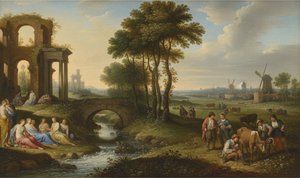
Cornelis van Poelenburch: Bridging Mannerism & the Dutch Baroque Landscape
Discover Cornelis van Poelenburch, a pivotal Dutch Baroque landscape painter bridging Mannerism & Italianate styles. Explore his life, key works, and lasting influence on 17th-century art with ArtsDot.

Dutch Baroque Masters: 10 Paintings That Shaped an Era | ArtsDot
Journey through the Golden Age with our guide to the Top 10 Dutch Baroque masterpieces! Explore iconic paintings by Rembrandt, Vermeer & Frans Hals. Find museum-quality art reproductions and elevate your home decor at ArtsDot.com.

Rembrandt's Masterpieces: Explore 25 Iconic Paintings & Prints | ArtsDot
Journey through Rembrandt van Rijn's 25 most iconic paintings & etchings. Explore Dutch Golden Age masterpieces, dramatic chiaroscuro, and timeless portraits. Find museum-quality art reproductions to elevate your home decor on ArtsDot.com.
Jan van Goyen: Master of Dutch Landscape & Atmospheric Perspective
Discover Jan van Goyen, the master of Dutch landscape painting. Explore his subtle technique, atmospheric realism & lasting influence on art history. Learn about this 17th-century pioneer at ArtsDot.
Jacob van Ruisdael: Master of Dutch Landscape & the Evocation of National Identity
Explore the life & work of Jacob van Ruisdael, the preeminent Dutch landscape painter. Discover his technical brilliance, symbolic depth, and lasting influence on art history. Learn about collecting Ruisdael's masterpieces.