 Preview
 Send
Send Share
Share
 Details

 Download
 Similars
 X-Ray
X-Ray Diaporama
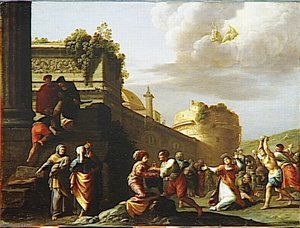
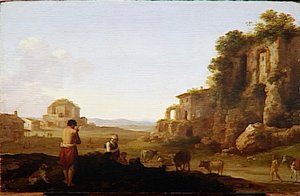
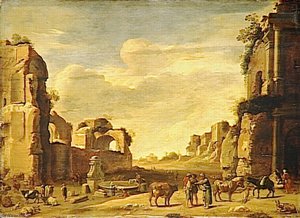
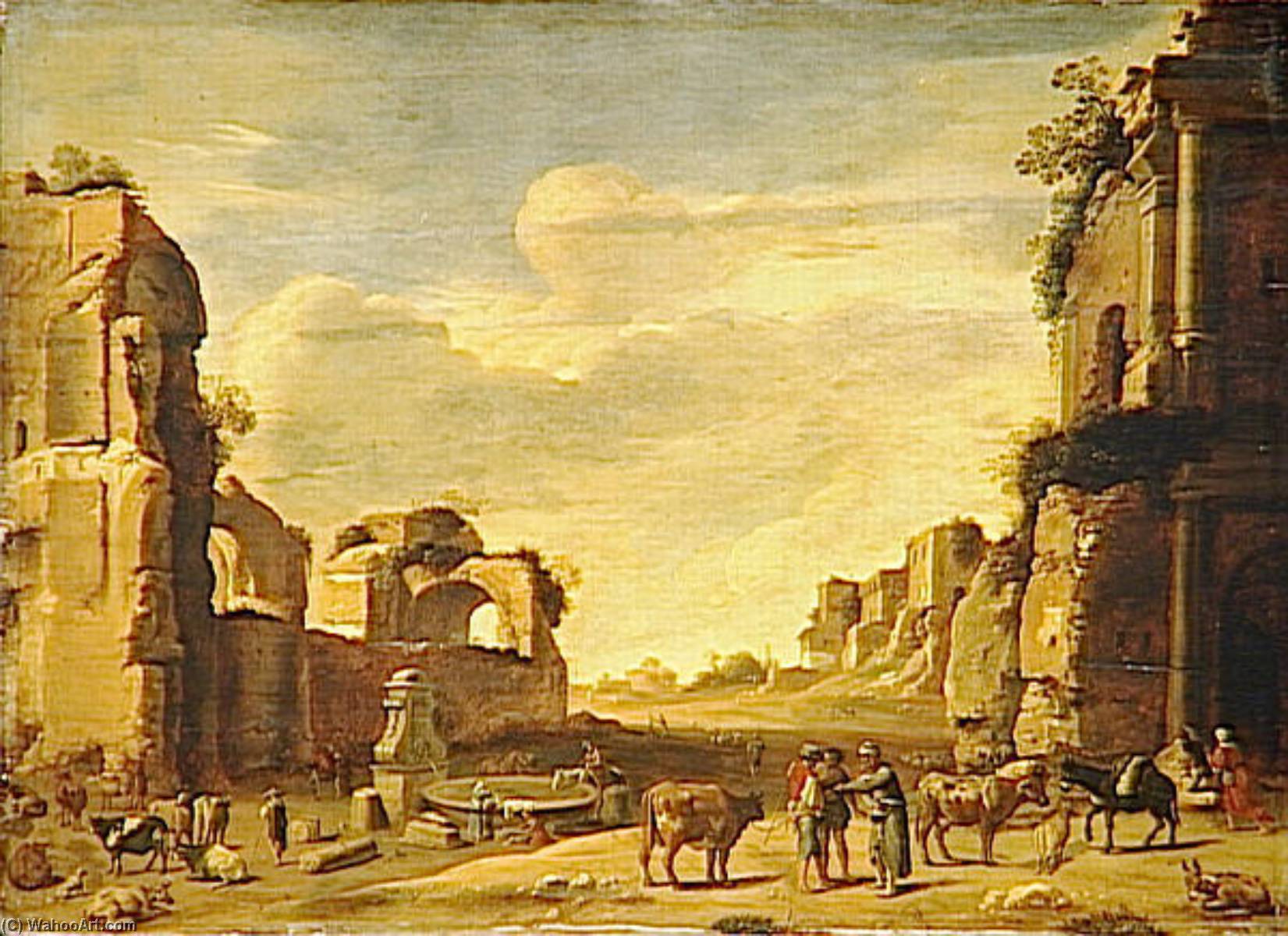
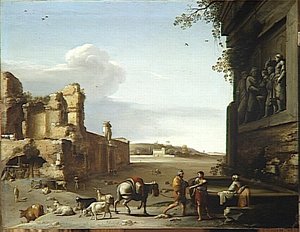
VUE DE FANTAISIE DU CAMPO VACCINO A ROME AVEC DEUX ANES


 Read More
Hand Made Oil Reproduction
Hand-painted oil on canvas in your size and frame, made to order by our artists. ( Buy Print Buy Image)




P118B $10

P118H $10

P118W $10

P438Z $10

P508JH $12

P508YH $12

P805H $10

P805Z $10

P919BZ $10

P919G $10

P919XJ $10

P959ZH $10

P968JZ $12

W106C $8

W218G $10

W218JH $8

W218Y $10

W307PJ $10

W316G $10

W316PJ $8

W316Y $10

W398PJ $8

W4111J $10

W500HY $15

W500JH $15

W692G $12

W849H $8

W940BG $15

W953PJ $8




Pick from our preset sizes that match the artwork's original proportions.

You may enter your own dimensions to fit a specific frame or space. If your selected size does not match the original image's proportions, we will either crop the artwork or extend the painting with additional hand-painted elements. A digital mockup will be sent for your approval before production begins.
Please note that the on-screen preview does not reflect the actual cropping or extension. Only the mockup will accurately show the final composition.
While custom sizes are available, we recommend selecting a dimension from the predefined list to preserve the original proportions.
After order, ArtsDot.com team will email client for instructions and provide a mockup preview
Worldwide Delivery () in 3/4 weeks instead of standard 5 weeks. (2 September). No compromise on quality.

Free Worldwide Express Shipping

High-Quality Linen Canvas

Full Shipping Insurance

Customs Tax Refund Guarantee

True Color Matching Guarantee

60-Day Return Policy (Defects Only)

100% Money-Back Guarantee

Bulk Discount Offer
 Glass option is only available in size under 110 CM

VUE DE FANTAISIE DU CAMPO VACCINO A ROME AVEC DEUX ANES
Reproduction Medium
Reproduction Size
-


Total Price
$ 363
A Dreamscape of Antiquity: Viewing Life in Campo Vaccino
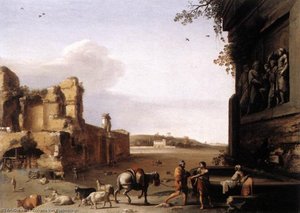
To gaze upon this depiction of the Campo Vaccino in Rome is to step through a veil into a romanticized past, a place where the grandeur of empire seems to whisper secrets across sun-drenched ruins. The painting captures not merely a view, but an entire mood—a confluence of history and human resilience. It possesses that quintessential, idealized quality often sought by collectors who desire art that transports them beyond the mundane into epochs of myth and majesty. The composition itself is masterful, drawing the eye along a central, receding pathway flanked by the skeletal remains of Roman architecture. Here, the weight of time is palpable; crumbling arches and weathered stone tell silent tales of emperors and forgotten glories.
The Painterly Touch: Technique and Atmosphere
The artist, channeling the spirit of 17th-century Dutch landscape painting, employs a technique that speaks volumes about its craftsmanship. Observe how the light—soft, diffused, and seemingly emanating from the right—bathes the scene in a warm, hazy glow, emphasizing the rich palette of ochres, terracotta, and deep browns. This masterful handling of light creates an almost palpable atmosphere, lending depth through both linear perspective, guiding us toward a distant vanishing point, and atmospheric perspective, softening the edges of what lies far away. The texture is wonderfully rendered; one can almost feel the grit of the ancient stone underfoot, contrasting beautifully with the ethereal smoothness suggested in the vast sky dominated by that magnificent cloud formation.
Symbolism and the Passage of Time
Beyond its picturesque beauty, this work resonates with profound symbolism. The juxtaposition of the enduring ruins against the vibrant tapestry of daily life—the scattered figures and gentle animals—is a meditation on impermanence versus continuity. The crumbling walls are potent symbols of time's relentless march, reminding us that even the mightiest human achievements eventually yield to decay. Yet, the very presence of life within this historical shell suggests something more enduring: the persistent spirit of humanity itself. It is a nostalgic vision, inviting contemplation on what lasts beyond stone and empire.
A Vision for Your Sanctuary
For those who appreciate art that serves as both decoration and deep reflection, this piece offers unparalleled depth. Whether adorning an entryway meant to evoke classical grandeur or gracing a study dedicated to history, its warm tones and romantic subject matter promise an immediate sense of cultured serenity. The blend of meticulous detail in the foreground with the sweeping scope of the landscape ensures that the eye never settles, always wandering through this beautiful, imagined corner of Rome. It is more than just a painting; it is an invitation to dream within the echoes of antiquity.
Related Artworks
Artist Biography
early life and training
cornelis van poelenburgh, a prominent dutch landscape painter, was born in utrecht, netherlands in 1594. he initially trained with abraham bloemaert, a renowned artist of the time. this foundational training laid the groundwork for van poelenburch's future success.artistic career and influences
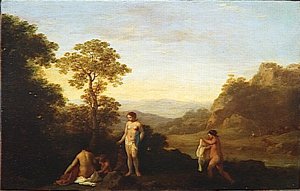
van poelenburch's travels to rome in the early 17th century significantly influenced his work, making him a leading representative of the first generation of dutch landscape painters active in italy. his small-scale paintings, often featuring italianate landscapes with small figures enacting biblical or mythological scenes, showcased his unique style. notable works:- satyrs spying on nymphs (after 1627), a characteristic example of van poelenburch's work, featuring archaic landscapes with figures bathing. (view on ArtsDot)
- council of the gods (c. 1630), a painting showcasing van poelenburch's idealized hilly landscape and roman-inspired goddesses, now housed in the mauritshuis (the hague, netherlands). (view on ArtsDot)
legacy and later life
van poelenburch's work was highly regarded by his contemporaries, including the grand duke of tuscany and the dutch stadholder. he later returned to utrecht, where he passed away in 1667, just a few years after his old teacher abraham bloemaert. key points:- born in utrecht, netherlands in 1594
- trained with abraham bloemaert
- influenced by his time in rome
- known for small-scale italianate landscapes with figures
- died in utrecht in 1667 view cornelis van poelenburch's artworks on ArtsDot learn more about cornelis van poelenburgh on wikipedia
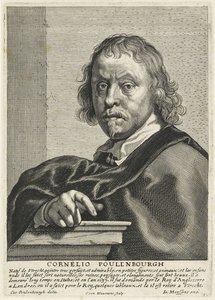
cornelis van poelenburch
1594 - 1667 , Netherlands
Quick Facts
- Artistic Movement Or Style: Dutch Landscape, Romanate
- Artists Or Movements Influenced By This Artist: ['Claude Lorraine']
- Artists Who Influenced This Artist: ['Abraham Bloemaert']
- Date Of Birth: 1594, Utrecht, Netherlands
- Date Of Death: 1667, Utrecht, Netherlands
- Full Name: Cornelis van Poelenburgh
- Nationality: Dutch
- Notable Artworks:
- Satyrs spying on nymphs
- Council of the gods
- Place Of Birth: Utrecht, Netherlands
Related Articles
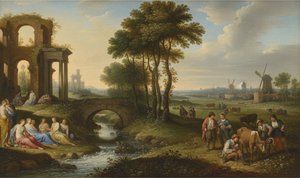
Cornelis van Poelenburch: Bridging Mannerism & the Dutch Baroque Landscape
Discover Cornelis van Poelenburch, a pivotal Dutch Baroque landscape painter bridging Mannerism & Italianate styles. Explore his life, key works, and lasting influence on 17th-century art with ArtsDot.
Jan van Goyen: Master of Dutch Landscape & Atmospheric Perspective
Discover Jan van Goyen, the master of Dutch landscape painting. Explore his subtle technique, atmospheric realism & lasting influence on art history. Learn about this 17th-century pioneer at ArtsDot.

Rembrandt's Masterpieces: Explore 25 Iconic Paintings & Prints | ArtsDot
Journey through Rembrandt van Rijn's 25 most iconic paintings & etchings. Explore Dutch Golden Age masterpieces, dramatic chiaroscuro, and timeless portraits. Find museum-quality art reproductions to elevate your home decor on ArtsDot.com.
Jacob van Ruisdael: Master of Dutch Landscape & the Evocation of National Identity
Explore the life & work of Jacob van Ruisdael, the preeminent Dutch landscape painter. Discover his technical brilliance, symbolic depth, and lasting influence on art history. Learn about collecting Ruisdael's masterpieces.
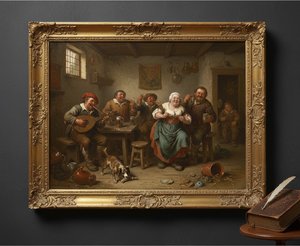
Adriaen van Ostade: A Master of Dutch Genre Painting & Social Commentary
Explore the life & work of Adriaen van Ostade, a leading Dutch Golden Age painter. Discover his realistic genre scenes, social commentary, and lasting influence on art history. Learn more at ArtsDot.