 Preview
 Send
Send Share
Share
 Details

 Download
 Similars
 X-Ray
X-Ray Diaporama
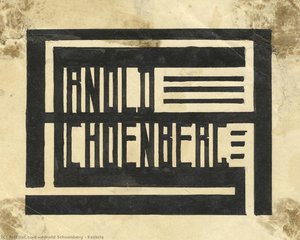
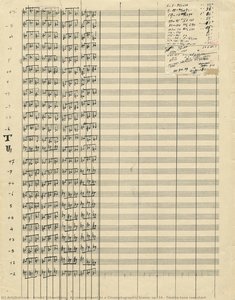
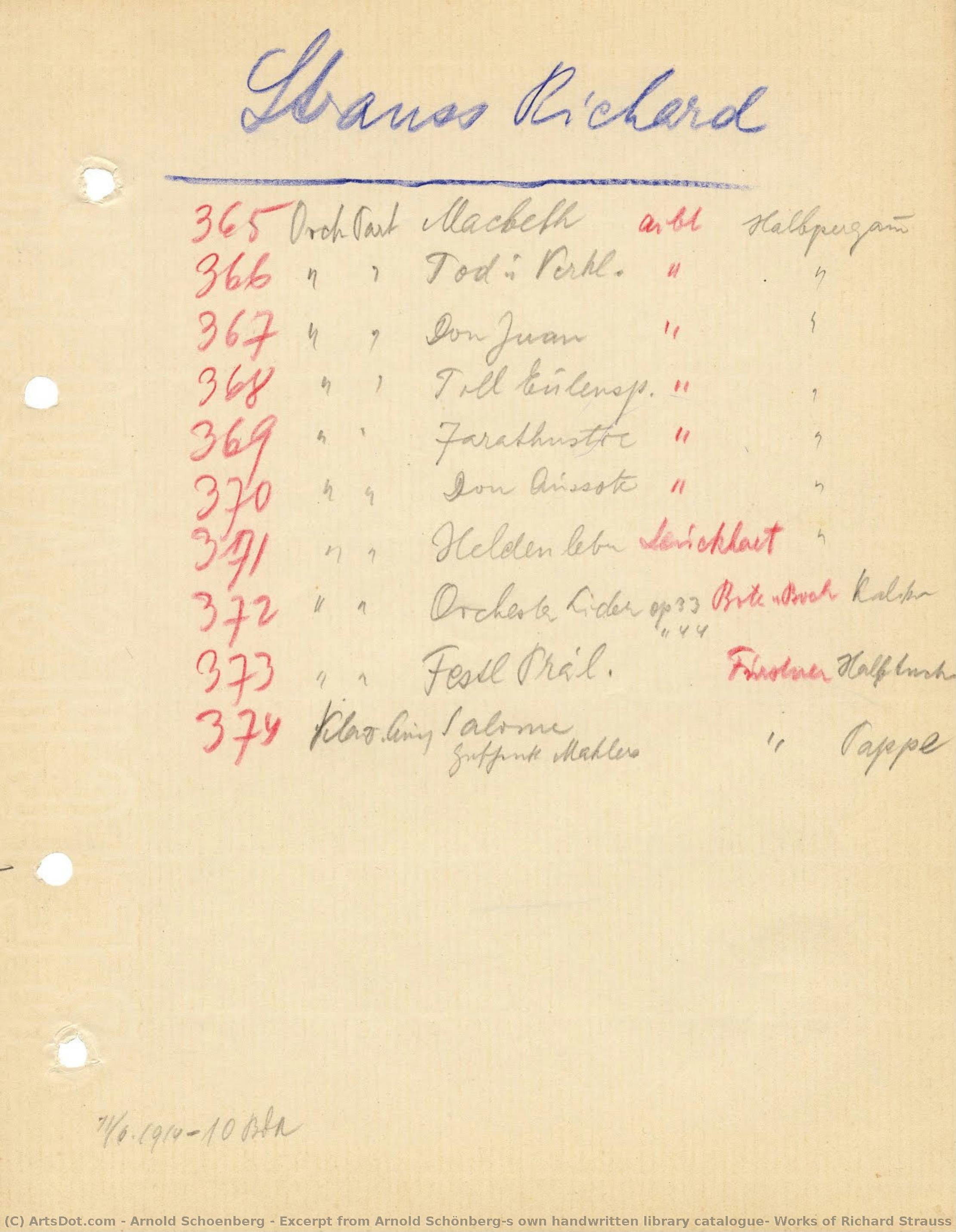
Excerpt from Arnold Schönberg’s own handwritten library catalogue: Works of Richard Strauss
 Ink On Paper
 1914
1914 16.0 x 20.0 cm
 Arnold Schönberg Center
 Read More
Hand Made Oil Reproduction
Hand-painted oil on canvas in your size and frame, made to order by our artists. ( Buy Print Buy Image)




P118B $10

P118H $10

P118W $10

P438Z $10

P508JH $12

P508YH $12

P805H $10

P805Z $10

P919BZ $10

P919G $10

P919XJ $10

P959ZH $10

P968JZ $12

W106C $8

W218G $10

W218JH $8

W218Y $10

W307PJ $10

W316G $10

W316PJ $8

W316Y $10

W398PJ $8

W4111J $10

W500HY $15

W500JH $15

W692G $12

W849H $8

W940BG $15

W953PJ $8




Pick from our preset sizes that match the artwork's original proportions.

You may enter your own dimensions to fit a specific frame or space. If your selected size does not match the original image's proportions, we will either crop the artwork or extend the painting with additional hand-painted elements. A digital mockup will be sent for your approval before production begins.
Please note that the on-screen preview does not reflect the actual cropping or extension. Only the mockup will accurately show the final composition.
While custom sizes are available, we recommend selecting a dimension from the predefined list to preserve the original proportions.
After order, ArtsDot.com team will email client for instructions and provide a mockup preview
Worldwide Delivery () in 3/4 weeks instead of standard 5 weeks. (23 August). No compromise on quality.

Free Worldwide Express Shipping

High-Quality Linen Canvas

Full Shipping Insurance

Customs Tax Refund Guarantee

True Color Matching Guarantee

60-Day Return Policy (Defects Only)

100% Money-Back Guarantee

Bulk Discount Offer
 Glass option is only available in size under 110 CM

Excerpt from Arnold Schönberg’s own handwritten library catalogue: Works of Richard Strauss
Reproduction Medium
Reproduction Size
-


Total Price
$ 263
Artwork Description
A Whisper from Vienna's Intellectual Crucible
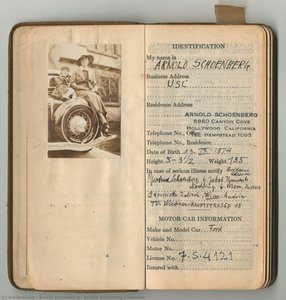
To gaze upon this piece is not merely to observe an object of art, but to touch the very residue of genius—a tangible echo from the vibrant, tumultuous intellectual life of early 20th-century Vienna. This reproduction captures an excerpt from Arnold Schönberg’s own handwritten library catalogue concerning the works of Richard Strauss. The surface itself, yellowed by the passage of time since 1914, immediately draws the eye into a private moment, a scholarly inventory that transcends its mundane function to become profound historical artifact. It speaks volumes not through grand pictorial gestures, but through the intimate precision of pencil script upon aged paper.
The Art of Ephemera and Genius
Technically, what we encounter here is the beauty of ephemera elevated to collectible art. The medium—pencil on delicate, time-worn paper—lends an air of exquisite fragility. Schönberg’s hand, recording titles like "36 Variations on a Waltz by Diabelli," is more than just cataloging; it is an act of intellectual curation. For the collector or designer, this piece offers unparalleled depth. It suggests a life lived intensely within the realm of high culture and profound musical theory. The black and white photograph captures the subtle variations in graphite density, allowing one to trace the ghost of the original ink strokes, inviting contemplation on the mind that penned them.
Historical Resonance: A Dialogue Across Eras
The context surrounding this catalogue is rich with narrative weight. Created when Schönberg was navigating the towering musical achievements of his contemporaries like Strauss, this document situates him at a pivotal crossroads in music history—the very moment tonality began to fracture and new harmonic languages were being forged. Owning or displaying such an item connects the viewer directly to the Second Viennese School, placing them in conversation with revolutionary artistic thought. It is a quiet testament to genius grappling with its own boundaries.
Symbolism of the Written Word
Symbolically, this piece speaks to the power of documentation and legacy. The catalogue represents order imposed upon vast creative output—a system attempting to contain the boundless energy of musical creation. For an interior space, it acts as a sophisticated intellectual anchor. It whispers tales of dedication, scholarly pursuit, and the relentless cataloging of beauty. It is art for those who appreciate the architecture of thought as much as the sweep of color.
Bringing Intimate History Home
For those seeking an accent piece that carries weight beyond mere decoration, this reproduction offers profound resonance. Its delicate scale (16 x 20 cm) makes it perfect for mantelpieces, study desks, or gallery walls where a touch of intellectual gravitas is desired. It does not shout its importance; rather, it invites the viewer to lean in, to read closely, and to feel the weight of history settling softly upon their modern space.
Related Artworks
Artist Biography
early life and musical beginnings
arnold schoenberg, an austrian-american composer, was born on september 13, 1874, in vienna, austria. his early life was marked by a humble beginning, with his father being a shoe-shopkeeper. despite this, schoenberg's innate passion for music led him to largely self-educate himself in the field.- schoenberg explored film music and wrote more tonal music, completing his chamber symphony no. 2 in 1939.
- he satirized fascist tyrants in ode to napoleon (1942), after byron.
- post-war vienna offered him honorary citizenship, but he was ill, as depicted in his string trio (1946).
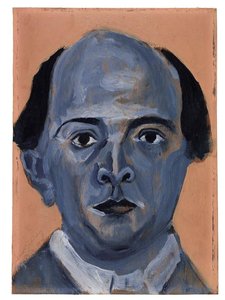
arnold schoenberg
1874 - 1951 , Austria
Quick Facts
- Artistic Movement Or Style: Twelve-tone technique; Expressionism
- Artists Or Movements Influenced By This Artist:
- Anton Webern
- Alban Berg
- Artists Who Influenced This Artist:
- Johannes Brahms
- Richard Wagner
- Date Of Birth: September 13, 1874
- Date Of Death: 1951
- Full Name: Arnold Schoenberg
- Nationality: Austrian-American
- Notable Artworks:
- Suite, op. 29
- Music Typewriter
- Staffliner
- Place Of Birth: Vienna, Austria
Related Articles
Harmonies on Canvas: Exploring the Visual Representation of Music in Art History
Explore the fascinating history of music's visual representation in art! From ancient symbolism to modern abstraction, discover how artists have captured sound and emotion on canvas. Expert insights & stunning examples.
The Vienna Secession: A Rebellion of Form & Spirit in Fin-de-Siècle Art
Discover the revolutionary Vienna Secession art movement! Explore Klimt, Olbrich & more. Learn about its history, characteristics & lasting influence on modern art. High-quality reproductions available.

25 Klimt Masterpieces: A Journey Through Iconic Art & Decor
Delve into the world of Gustav Klimt with our top 25 masterpieces! Explore his iconic paintings – 'The Kiss,' 'Portrait of Adele,' and more. Discover museum-quality reproductions & curated decor ideas. Explore the full collection online at ArtsDot.com.
Echoes of Modernity: Exploring Artistic Transformations in Early 20th-Century Painting
Explore the revolutionary artistic transformations of early 20th-century painting – Fauvism, Cubism, Expressionism & more. Discover key artists and movements shaping modern art history with ArtsDot.
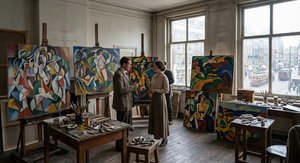
Echoes of Modernity: Exploring Artistic Transformations in Early 20th-Century Painting
Explore the revolutionary artistic transformations of early 20th-century painting – Fauvism, Cubism & more. Discover key artists and movements shaping modern art history with ArtsDot.