 Preview
 Send
Send Share
Share
 Details

 Download
 Similars
 X-Ray
X-Ray Diaporama
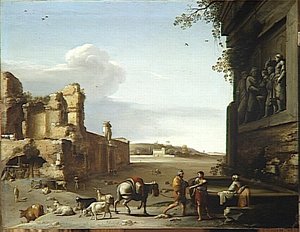
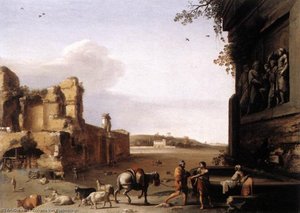
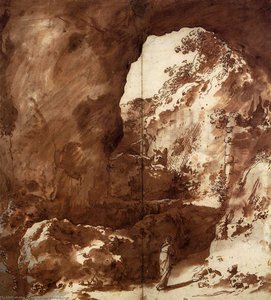
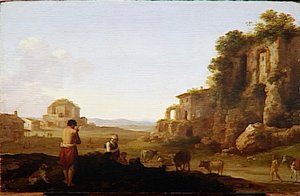
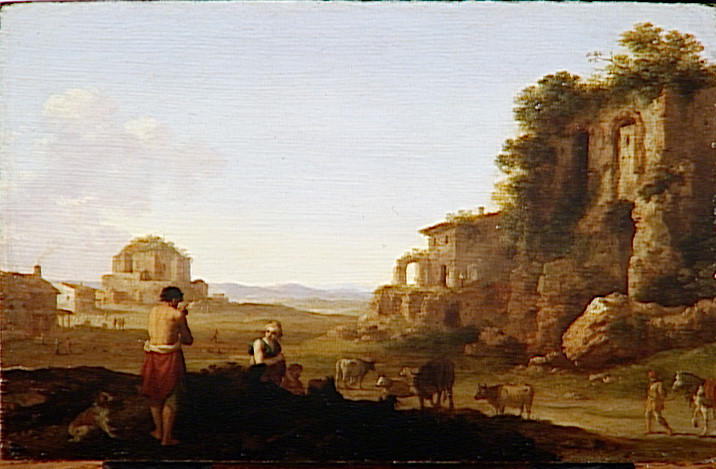
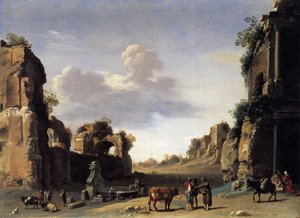
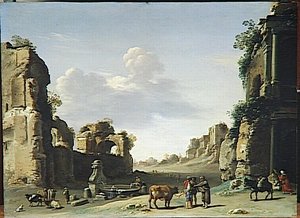
RUINES DU PALAIS DES EMPEREURS ET TEMPLE DE MINERVA MEDICA A ROME


 Read More
Giclée / Art Print
Museum-quality giclée or canvas print with fast production and flexible finish options. ( Buy Hand Made Painting Buy Image)




P118B $10

P118H $10

P118W $10

P438Z $10

P508JH $12

P508YH $12

P805H $10

P805Z $10

P919BZ $10

P919G $10

P919XJ $10

P959ZH $10

P968JZ $12

W106C $8

W218G $10

W218JH $8

W218Y $10

W307PJ $10

W316G $10

W316PJ $8

W316Y $10

W398PJ $8

W4111J $10

W500HY $15

W500JH $15

W692G $12

W849H $8

W940BG $15

W953PJ $8




Pick from our preset sizes that match the artwork's original proportions.

You may enter your own dimensions to fit a specific frame or space. If your selected size does not match the original image's proportions, we will either crop the artwork or extend the image with a mirrored or solid-fill edge. A digital mockup will be sent for your approval before production begins.
Please note that the on-screen preview does not reflect the actual cropping or extension. Only the mockup will accurately show the final composition.
While custom sizes are available, we recommend selecting a dimension from the predefined list to preserve the original proportions.
Worldwide Delivery () in 2 weeks instead of standard 4/5 weeks. (27 August)

Free Worldwide Express Shipping

High-Quality Linen Canvas

Full Shipping Insurance

Customs Tax Refund Guarantee

True Color Matching Guarantee

60-Day Return Policy (Defects Only)

100% Money-Back Guarantee

Bulk Discount Offer
 Glass option is only available in size under 110 CM

RUINES DU PALAIS DES EMPEREURS ET TEMPLE DE MINERVA MEDICA A ROME
Giclée / Art Print
Reproduction Size
-


Total Price
$ 63
Collectible Description
The Echoes of Empire: A Roman Vista
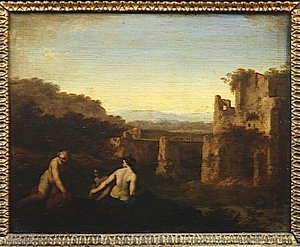
To gaze upon this scene is to step across the threshold of time itself, into the sun-dappled melancholy of an ancient Rome. This painting captures not merely ruins, but the very spirit of endurance—the magnificent dialogue between human ambition and nature's relentless embrace. The composition unfolds horizontally, inviting the viewer on a leisurely promenade through crumbling grandeur. Central to the view are the majestic remnants of imperial life, perhaps the Palace of Emperors or the Temple dedicated to Minerva Medica. These architectural bones, softened by centuries of neglect, provide a breathtaking counterpoint to the vibrant, living tapestry woven into the foreground.
A Masterclass in Atmospheric Depth
The technical brilliance of this work lies in its masterful handling of light and space. The artist employs atmospheric perspective with exquisite sensitivity; as the eye travels toward the distant arches and colonnades, the details soften, the colors mute, and the air itself seems palpable. This illusion of depth is further enhanced by the subtle interplay of linear perspective within the surviving structures. Notice how the foreground—populated by figures engaged in quiet daily rituals: a shepherd tending his flock, a woman with her children—anchors us firmly in the present moment, while the receding lines of the architecture pull our gaze into an imagined, glorious past. The palette itself is deeply resonant, dominated by rich ochres, earthy browns, and muted greens, suggesting the patina of age upon stone and foliage.
Symbolism and the Pastoral Ideal
Beyond its technical merits, this piece resonates with profound symbolic weight. The ruins themselves are potent memento mori—a beautiful reminder of the transience of even the greatest human achievements. Yet, this sense of decay is never despairing. Instead, it fosters a deep contemplation on continuity. Nature, represented by the lush foliage and the gentle presence of life in the foreground, has reclaimed its own, suggesting that while empires may fall, the cycle of life persists. It speaks to a timeless harmony where human history pauses for the quiet rhythm of the seasons.
Artistic Lineage and Emotional Resonance
The style points compellingly toward the tradition of 17th-century Dutch landscape painting, particularly echoing the sensibilities of artists like Cornelis van Poelenburch. His influence is visible in the integration of classical Italianate settings with a keen sense of naturalism. The technique suggests thin, layered glazes of oil paint, allowing the light to permeate the surface and giving the entire scene an almost luminous quality. For the collector or designer, this reproduction offers more than mere decoration; it offers a window into a romanticized antiquity—a place of quiet contemplation, where one can feel the weight of history while basking in the enduring beauty of the natural world.
Related Artworks
Artist Biography
early life and training
cornelis van poelenburgh, a prominent dutch landscape painter, was born in utrecht, netherlands in 1594. he initially trained with abraham bloemaert, a renowned artist of the time. this foundational training laid the groundwork for van poelenburch's future success.artistic career and influences
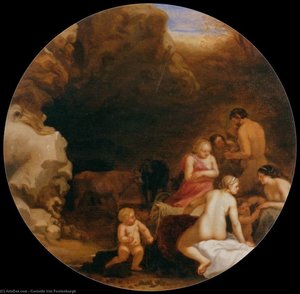
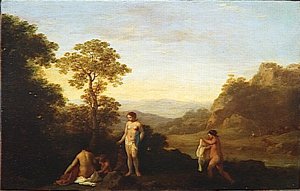
van poelenburch's travels to rome in the early 17th century significantly influenced his work, making him a leading representative of the first generation of dutch landscape painters active in italy. his small-scale paintings, often featuring italianate landscapes with small figures enacting biblical or mythological scenes, showcased his unique style. notable works:- satyrs spying on nymphs (after 1627), a characteristic example of van poelenburch's work, featuring archaic landscapes with figures bathing. (view on ArtsDot)
- council of the gods (c. 1630), a painting showcasing van poelenburch's idealized hilly landscape and roman-inspired goddesses, now housed in the mauritshuis (the hague, netherlands). (view on ArtsDot)
legacy and later life
van poelenburch's work was highly regarded by his contemporaries, including the grand duke of tuscany and the dutch stadholder. he later returned to utrecht, where he passed away in 1667, just a few years after his old teacher abraham bloemaert. key points:- born in utrecht, netherlands in 1594
- trained with abraham bloemaert
- influenced by his time in rome
- known for small-scale italianate landscapes with figures
- died in utrecht in 1667 view cornelis van poelenburch's artworks on ArtsDot learn more about cornelis van poelenburgh on wikipedia
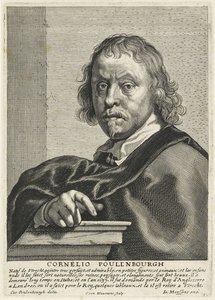
cornelis van poelenburch
1594 - 1667 , Netherlands
Quick Facts
- Artistic Movement Or Style: Dutch Landscape, Romanate
- Artists Or Movements Influenced By This Artist: ['Claude Lorraine']
- Artists Who Influenced This Artist: ['Abraham Bloemaert']
- Date Of Birth: 1594, Utrecht, Netherlands
- Date Of Death: 1667, Utrecht, Netherlands
- Full Name: Cornelis van Poelenburgh
- Nationality: Dutch
- Notable Artworks:
- Satyrs spying on nymphs
- Council of the gods
- Place Of Birth: Utrecht, Netherlands
Related Articles
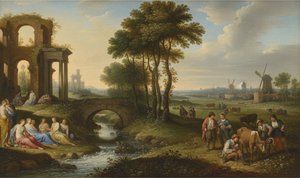
Cornelis van Poelenburch: Bridging Mannerism & the Dutch Baroque Landscape
Discover Cornelis van Poelenburch, a pivotal Dutch Baroque landscape painter bridging Mannerism & Italianate styles. Explore his life, key works, and lasting influence on 17th-century art with ArtsDot.
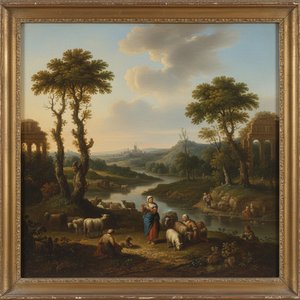
Nicolaes Berchem: Dutch Golden Age Pastoralism & the Evolution of Landscape Painting
Explore the captivating world of Nicolaes Berchem, a leading Dutch Golden Age painter. Discover his idyllic landscapes, masterful technique & lasting influence on art history. Learn more at ArtsDot.
Golden Light & Dutch Skies: Bringing the Magic of Dutch Golden Age Landscapes into Your Home
Transform your home with the breathtaking light of Dutch Golden Age landscapes. Discover how hand-painted oil reproductions of masterworks like Ruisdael and Vermeer bring timeless elegance, atmosphere, and soulful texture to modern interiors. Elevate your space with museum-quality art.
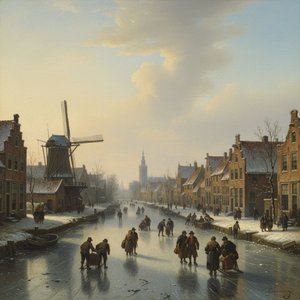
Charles Leickert: Capturing the Dutch Golden Age Light – A Comprehensive Study of Technique, Context, and Legacy
Explore the captivating winter landscapes of Charles Leickert, a master of Dutch Golden Age light & atmosphere. Discover his techniques, symbolism, and lasting legacy – a comprehensive study for art enthusiasts and collectors.
Jan van Goyen: Master of Dutch Landscape & Atmospheric Perspective
Discover Jan van Goyen, the master of Dutch landscape painting. Explore his subtle technique, atmospheric realism & lasting influence on art history. Learn about this 17th-century pioneer at ArtsDot.